Best of Dampier Strait, 7 Days / 6 Nights
Seven Days in the Four Kings
Six nights in the Dampier Strait, where a single dive once produced 374 species of fish.
Best of Dampier Strait, 7 Days / 6 Nights · Liveaboard from Waisai Harbour
I had been diving for years before I went to Raja Ampat, and I thought I had a reasonable sense of what a good reef looked like. Then I did the check dive. On the first afternoon. Before we had even left the anchorage.
There is a problem with writing about Raja Ampat, which is that everything true about it sounds like marketing. Seventy-five per cent of all known hard coral species on earth. More reef fish than anywhere else on the planet. A world record for the most fish species counted in a single dive, set here, never beaten. Written down it reads like a brochure. Underwater it reads as slightly conservative.
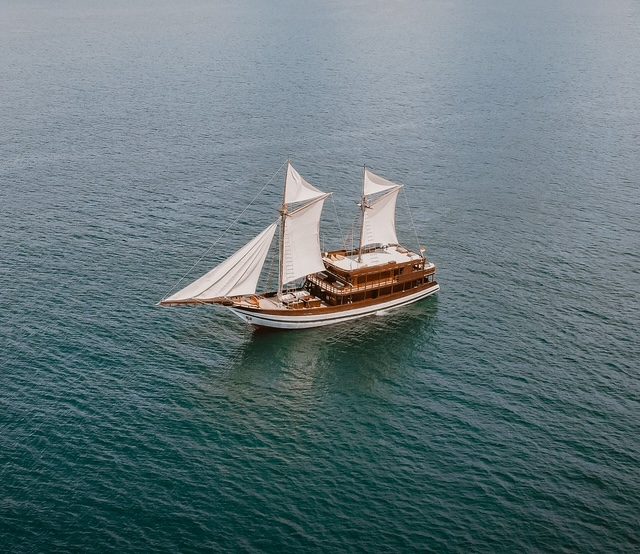
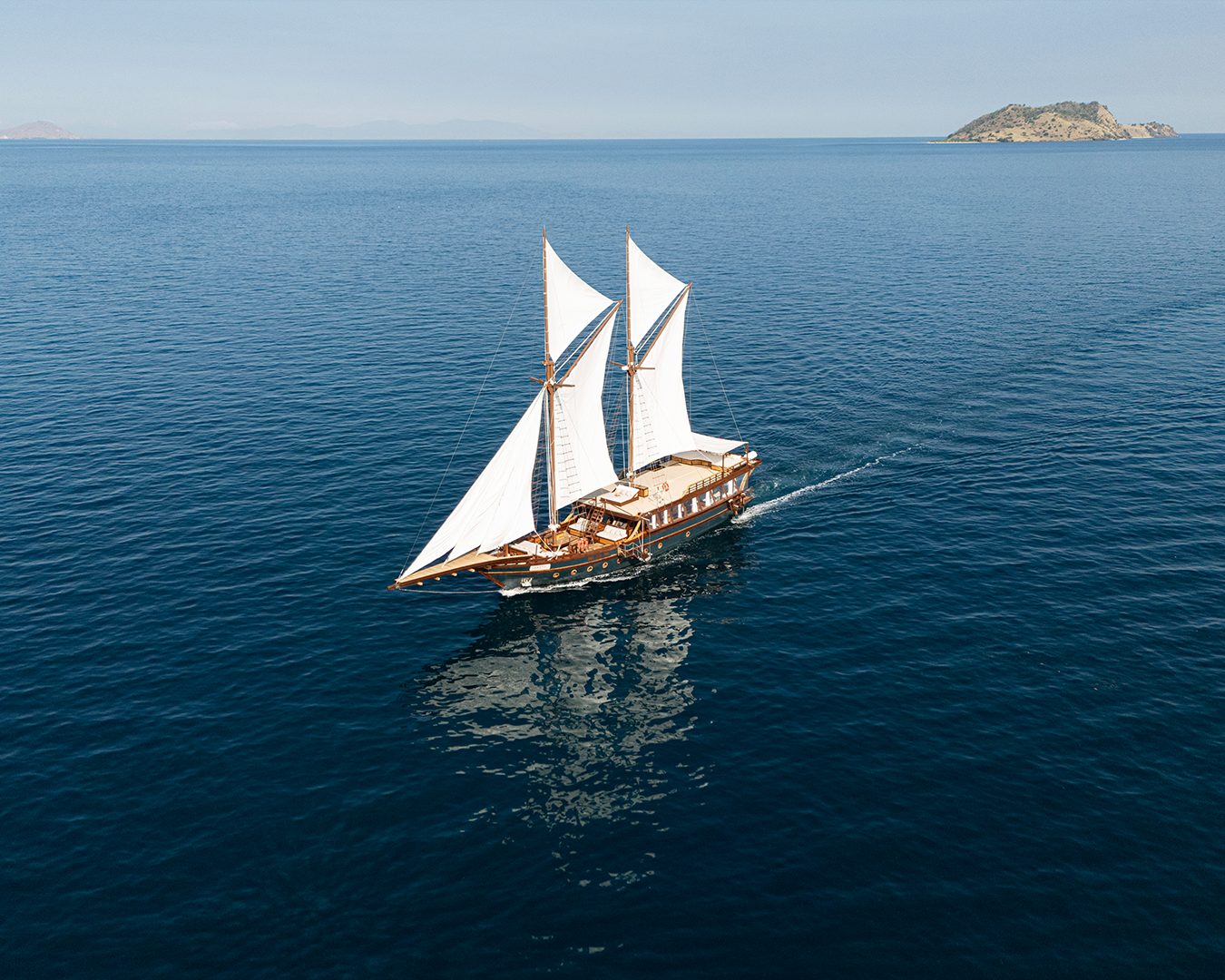
I went for the seven-day Dampier Strait itinerary — six nights aboard, around nineteen dives, working the channel between Waigeo and Batanta and out to the Fam Islands and Kawe. This is an account of what was actually down there.
Why this particular piece of ocean
Raja Ampat sits in the Bird's Head Seascape at the far eastern end of Indonesia, and it is the exact centre of the Coral Triangle — the most biodiverse marine region on the planet. The archipelago runs to more than 1,500 islands, and the four main ones give it its name: Waigeo, Batanta, Salawati and Misool. The Four Kings.
The Dampier Strait is the channel between Waigeo and Batanta, and it is the engine. Pacific water is forced through a relatively narrow gap, and it arrives cold, fast and thick with nutrient. Everything downstream of that — the coral cover, the fish density, the pelagic traffic — is a consequence of the geography.
| Hard coral | Around 600 species — roughly 75% of all known coral species on earth |
| Reef fish | More than 1,500 species, the highest diversity recorded anywhere |
| The record | 374 fish species on a single dive at Cape Kri, counted by Dr Gerald Allen in 2012 |
| The trend | Eleven years earlier the same scientist counted 327 at the same site. It went up. |
| Turtles | Five of the world's seven sea turtle species |
| Endemics | Including the Raja Ampat walking sharks, found nowhere else on earth |
That fourth line is the one I keep coming back to. Almost every reef I have dived in twenty years is in worse condition than it was. This one measurably improved, and it improved because of two decades of local conservation work and a regency law that gives full protection to every shark and ray across forty-five thousand square kilometres.
The number that matters at Cape Kri is not 374. It is that the previous count was 327, and the gap between them is what a protected reef does when you leave it alone.
Seven days, as they ran
Day 1 · Waisai → Mioskon
Aboard at Waisai Harbour by eleven, cabins sorted, kit assembled, and into the water off Mioskon Island in the afternoon. Nominally a check dive.
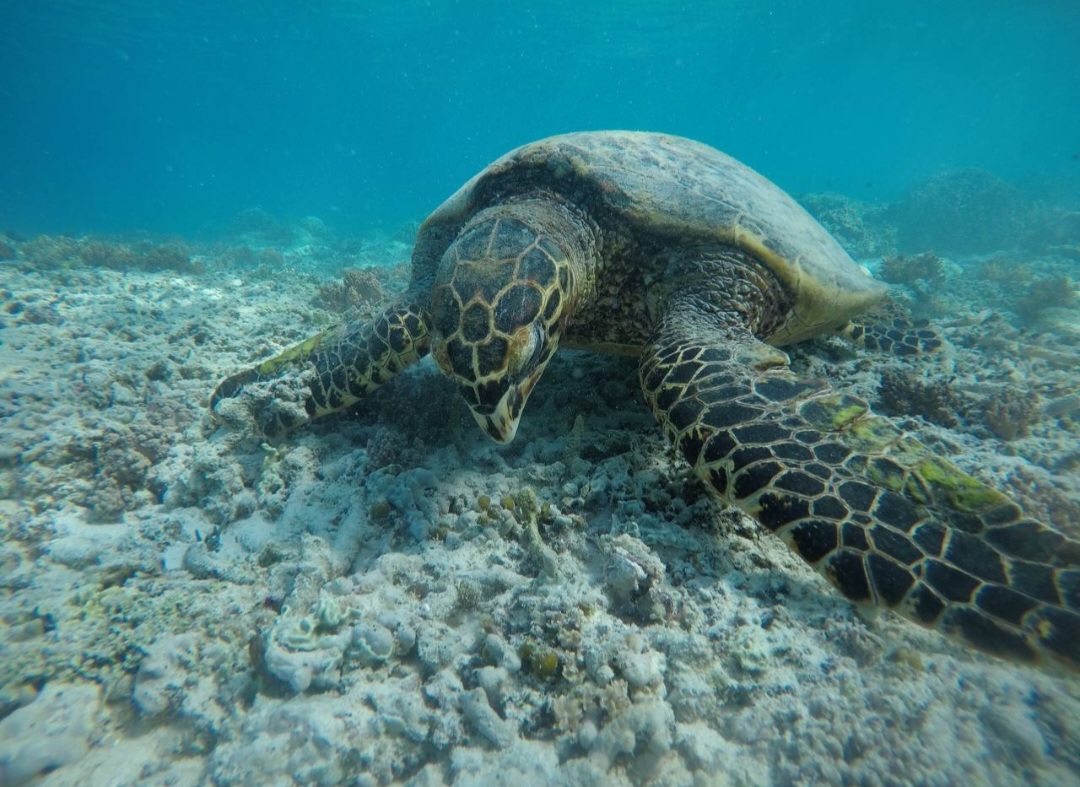
Within ten minutes we had found two tasselled wobbegongs — Eucrossorhinus dasypogon, a flat carpet shark with a fringe of fleshy tassels round its jaw, lying motionless under a table coral and looking exactly like a piece of weedy reef until it resolves into an animal. Then schooling batfish that came to inspect us rather than the other way round, a hawksbill turtle, and anthias in such quantity above the coral that the water had a texture to it.
I surfaced and said something inarticulate. Robin, one of our guides, said this was the easy one. He was not being modest.
Day 2 · Arborek, the Fam Islands, and the first night dive
Four dives, and the day the manta question is answered. The cleaning stations here sit on shallow sand, and the technique is simply to settle at the edge, stay low, breathe slowly and wait. Reef mantas come in to be worked over by cleaner wrasse and will tolerate divers who behave, sometimes for the better part of an hour.
We had five. One of them was melanistic — entirely black above and below, no white markings at all. Up to forty per cent of the reef mantas here carry that colouration, a concentration found nowhere else in the world, and seeing one pass overhead against the surface light is genuinely startling.
Late afternoon at Arborek village, which is a Papuan community of a few hundred people with a jetty that is itself a famous dive. Then the night dive, and this is where Raja Ampat starts producing things I had only read about. Bioluminescent plankton coming off your fins in green sparks. Spanish dancers. Sleeping parrotfish in their mucus cocoons. And the animal everyone comes for after dark: the walking shark.
The Raja epaulette shark, Hemiscyllium freycineti, locally called Kalabia, is about sixty centimetres long, endemic to this archipelago, and does not swim so much as walk — using its pectoral and pelvic fins as legs to move across the reef top hunting at night. It is one of the strangest things I have watched underwater. We saw three in fifty minutes.

Day 3 · Blue Magic · Cape Kri · Citrus Ridge · Piaynemo
The headline day. Blue Magic first — a submerged pinnacle in the middle of the strait, current running, with a cleaning station on top that oceanic mantas use. These are the larger species, up to seven metres across, and they are a different proposition from the reef mantas: less habituated, more likely to make one pass and go. We got two passes and I will take it.
Below them, the pinnacle itself: grey reef sharks patrolling the flow, a tornado of bigeye trevally, schooling barracuda holding station, and dogtooth tuna appearing out of the blue at speed. Wobbegongs wedged under every second overhang.
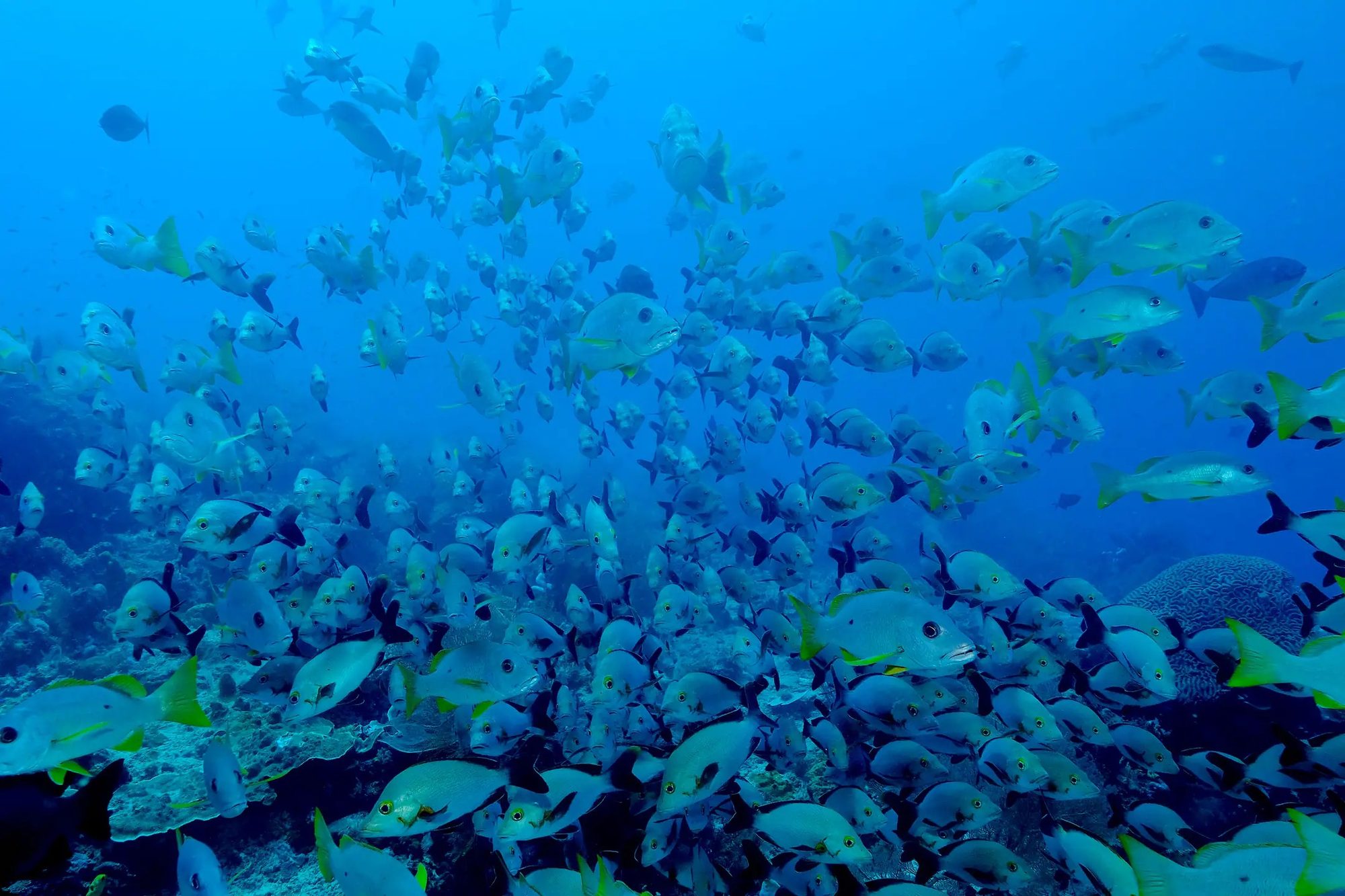
Then Cape Kri, which is the world record site. I want to be honest about this — you cannot perceive 374 species. What you perceive is that everywhere you point your eyes there is something you have not seen before, at every scale simultaneously. Fusiliers and surgeonfish in the mid-water. Sweetlips and snapper stacked along the slope. Napoleon wrasse. Bumphead parrotfish audibly chewing coral. Six-banded angelfish, threadfin and purple anthias, moorish idols, a dozen butterflyfish species. And on the slope, if you slow down, mantis shrimp, nudibranchs and pygmy seahorses on the gorgonians.
Citrus Ridge afterwards for soft coral in colours that look artificially saturated even in raw files. And in the afternoon, dry, the three hundred steps up to the Piaynemo viewpoint over the karst lagoons — which is the single most photographed view in West Papua and is, unusually, better than its photographs.
Day 4 · Kawe
Kawe is remote, north-west, and weather-dependent — the crew will call it off rather than push it, which they should. We got it, and it was the wildest diving of the week.
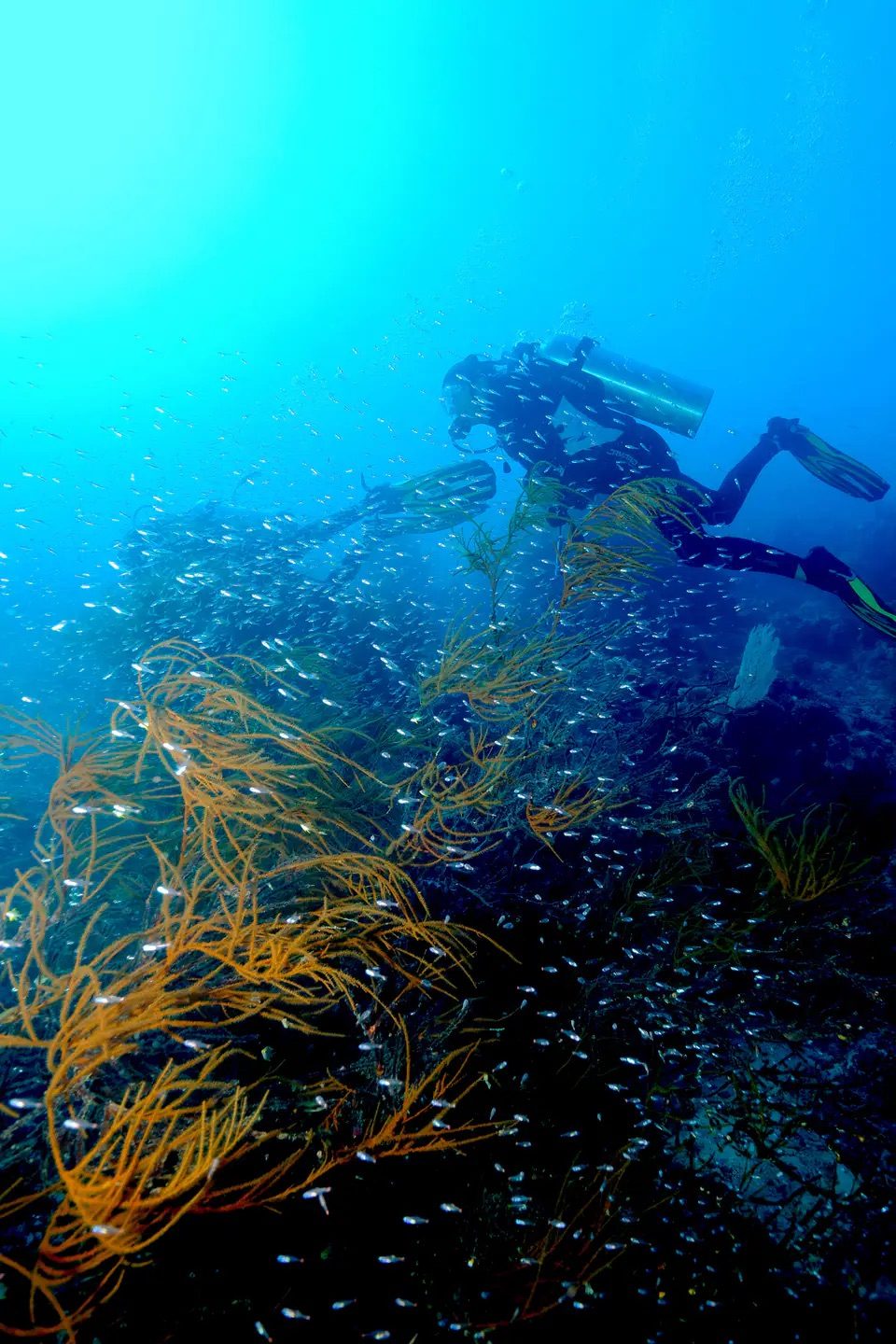
The hard coral coverage here is close to absolute: staghorn and table Acropora in overlapping plates running for as far as visibility allows, with no bleaching, no algal overgrowth and no rubble. I have not seen coral in that condition anywhere else. Add large pelagics passing in the blue — reef sharks, trevally, a school of chevron barracuda that took two minutes to go past — and a second night dive that produced two more walking sharks, a flamboyant cuttlefish and a blue-ringed octopus that our guide indicated and then very firmly kept everybody away from.
Day 5 · Northern Gam · Melissa's Garden
Three dives in sheltered water between volcanic islands, and Melissa's Garden is the one to write about. It is a shallow hard coral garden and it is widely held to be among the finest in the world, which I would not argue with. Stony corals, soft corals and hydrocorals growing into one another across a plateau at five to fifteen metres, in the sort of light that makes the whole thing look staged.
This is a site to dive slowly. Fairy basslets in three colours. Giant clams with mantles in electric blue and green. Ghost pipefish hanging vertically against crinoids. Juvenile sweetlips doing their absurd flapping impression of a flatworm. Pygmy seahorses on the sea fans — Bargibant's on the Muricella, Denise's on the smaller gorgonians, both about the size of a grain of rice and both invisible until somebody points.
Day 6 · Dampier Strait · the flying foxes
Three final dives back in the strait, working the sites the tide favours that day. Then, in the late afternoon, we anchored off a beach and waited, and at dusk thousands of giant flying foxes lifted out of the trees and crossed the sky in a stream that went on and on. It is a straightforward spectacle and it needs no explaining.
Day 7 · Last dive and out
One guided dive in the morning, gear rinsed and packed, off the boat at Waisai by around noon, and onto the two o'clock ferry to Sorong for onward flights. A tidy ending to a week that was anything but tidy underwater.
The coral — which is actually the story
Divers talk about fish and photograph megafauna, and it is easy to leave Raja Ampat describing mantas and sharks. But the thing that made me sit up was the coral, and it deserves its own paragraph.
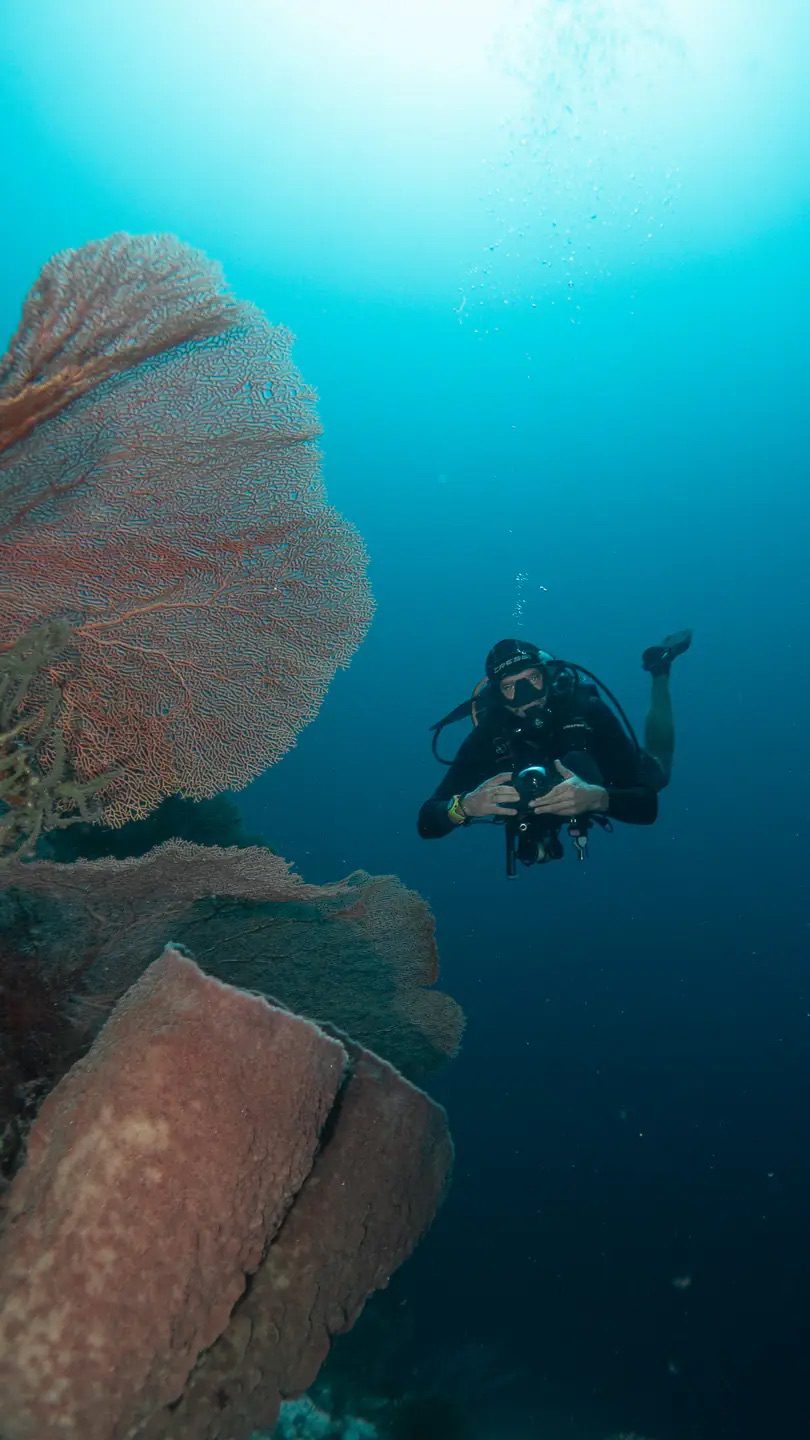
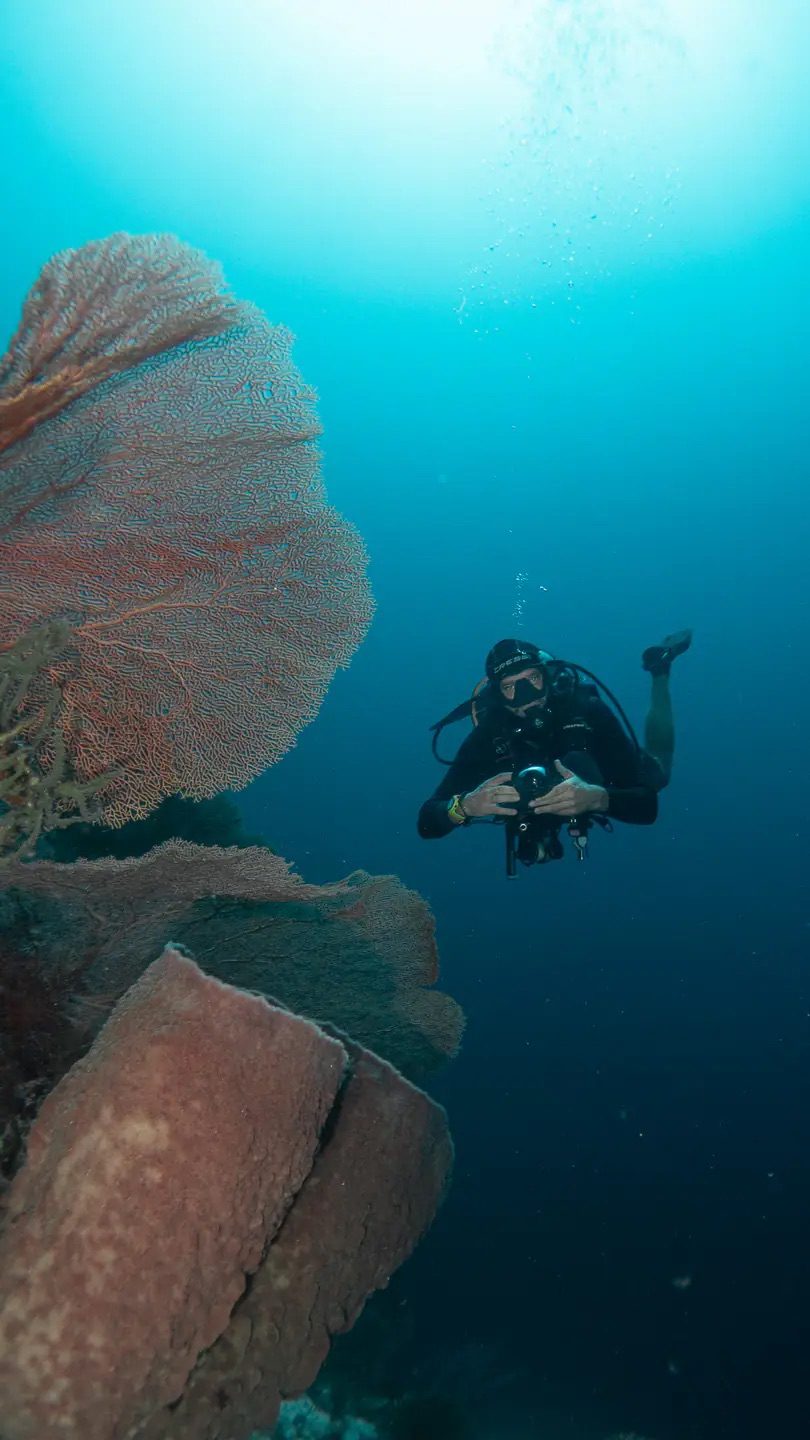
- Roughly 600 species of hard coral. About three-quarters of every hard coral species science has described. Some sites will show you more coral diversity in one dive than an entire Caribbean itinerary.
- Acropora everywhere. Staghorn and table corals forming overlapping tiers across whole slopes at Kawe and Melissa's Garden, in a state of health that is now genuinely rare.
- Soft coral and sea fans. Dendronephthya in pink, orange and cream on the current-swept ridges, and large gorgonian fans on the deeper walls — which are the pygmy seahorse habitat.
- Hydrocorals and sponges. Barrel sponges tall enough to climb into, and encrusting growth filling every gap. There is very little bare substrate anywhere.
- Giant clams. Tridacna, some of them a metre across, with mantles patterned in iridescent blue, green and gold. They snap shut if you cast a shadow, which never stops being satisfying.
The fish — what you will reliably see
- Tasselled wobbegong. Present at almost every site, under table corals and ledges. Flat, carpet-patterned, bearded with tassels. Harmless if left alone, and one of the great photographic subjects in Indonesia.
- Walking sharks. Endemic. Nocturnal. Sixty centimetres, and they walk. Expect two to five on a good night dive, and expect it to be the thing you describe first when you get home.
- Reef and oceanic mantas. Reef mantas at the shallow cleaning stations near Arborek; oceanic mantas at Blue Magic. A significant proportion melanistic.
- Reef sharks. Blacktip, whitetip and grey reef, in numbers that reflect twenty years of full protection rather than tourism management.
- Schooling pelagics. Chevron and blackfin barracuda in barrels, bigeye trevally in tornadoes, giant trevally hunting, dogtooth tuna and rainbow runners in the blue.
- Reef heavyweights. Napoleon wrasse, bumphead parrotfish in schools, potato cod, giant sweetlips, batfish that follow you around.
- Turtles. Green and hawksbill on essentially every dive. Five species occur in the archipelago.
- Anthias, fusiliers, damsels. The background hum. Threadfin and purple anthias in clouds thick enough to obscure the reef behind them.
The macro — what the guides find for you
You will not spot most of this yourself. Robin, Nixon and Reymon found things I would have swum straight past, and after six days I had improved by roughly nothing.
- Pygmy seahorses. Three species here — Bargibant's, Denise's and Pontoh's — each on a different host and each about a centimetre long.
- Cephalopods. Flamboyant cuttlefish, blue-ringed octopus, mimic octopus, reef octopus. The mimic is the prize and we did not get one.
- Nudibranchs. Chromodoris, Nembrotha, Phyllidia and the rest, in numbers that make a sand slope a fifty-minute dive.
- Ghost pipefish, frogfish, mantis shrimp. Ornate and robust ghost pipefish against crinoids; peacock mantis shrimp on the rubble, which are worth watching for the eyes alone.
- Papuan garden eels. Only described in 2010, and they stand in colonies out of the sand like a field of grass until you get too close and the whole field disappears at once.
- Mandarinfish. At dusk, in shallow rubble, during a courtship display lasting a few seconds and worth the whole wait.
Practical notes
- Getting there is the hard part. Fly to Sorong (SOQ) via Jakarta or Makassar, then the ferry across to Waisai. Build in a buffer night in Sorong — the connection is not one to run tight, and missing the ferry means missing the boat.
- October to April is the season. Calm seas, best visibility, and the plankton-rich months when the manta aggregations build. Outside that window the exposed northern sites like Kawe become unreliable.
- There is a conservation fee. The Raja Ampat marine park permit is compulsory, payable in advance or on arrival, and it funds the patrols that made the reef what it is. Pay it cheerfully.
- Certification and currents. Advanced Open Water with drift experience is the sensible floor. Most Dampier sites are manageable; Blue Magic and Cape Kri on a running tide are not beginner dives. Nitrox is worth taking for a nineteen-dive week.
- Bring a torch and a reef hook. The night dives are half the value of the itinerary, and a hook makes the current sites restful rather than exhausting.
- Water is warm. Twenty-eight to thirty degrees. A 3mm is plenty — a genuine relief after southern Komodo.
Raja Ampat or Komodo
I get asked this constantly, and the honest answer is that they are not really competing.
Komodo has stronger current, bigger drama, cold-water macro in the south, and it is far easier to reach — ninety minutes from Bali. Raja Ampat has more species, better coral, the endemics, and the sense of being somewhere genuinely remote. Komodo is the better first Indonesian liveaboard. Raja Ampat is the one people go back for.
If you are going to do only one, and you care most about coral and diversity, come here. If you are going to do both, do Komodo first — otherwise Raja Ampat rather spoils it.
If you do not dive
Less accommodating than Komodo, and I would say so plainly. The itinerary is built around nineteen dives and the best of it is at depth. That said: the snorkelling over Melissa's Garden and the shallow coral gardens is exceptional, Piaynemo is a hike rather than a dive, Arborek village is worth an afternoon, the flying foxes need no equipment, and a pre-dawn excursion on Waigeo will get you Wilson's and Red birds of paradise, which are worth the trip on their own. But a non-diving partner on a dive liveaboard should know what they are agreeing to.
I have dived a good many reefs. This is the only one where the scientific record shows it getting better rather than worse, and you can see the difference without being told.
Itineraries are indicative and subject to weather, sea and current conditions; the Kawe leg in particular is weather-dependent. Wildlife sightings can never be guaranteed. Raja Ampat marine park conservation fees are payable separately.
Frequently Asked Questions
How do I get to Raja Ampat?
Fly to Sorong (SOQ) via Jakarta or Makassar, then take the ferry across to Waisai on Waigeo. Build in a buffer night in Sorong — the connection is not one to run tight, and missing the ferry means missing the boat.
When is the best time to dive Raja Ampat?
October to April. That window gives calm seas, the best visibility and the plankton-rich months when manta aggregations build. Outside it, exposed northern sites such as Kawe become unreliable.
How many fish and coral species are there in Raja Ampat?
Around 600 hard coral species — roughly 75% of all coral species known on earth — and more than 1,500 reef fish species, the highest diversity recorded anywhere. Cape Kri holds the world record for a single dive: 374 fish species, counted by Dr Gerald Allen in 2012, up from 327 at the same site eleven years earlier.
What is a walking shark?
The Raja epaulette shark, Hemiscyllium freycineti, locally called Kalabia. It is about sixty centimetres long, endemic to this archipelago, nocturnal, and uses its pectoral and pelvic fins as legs to walk across the reef top while hunting. Expect two to five sightings on a good night dive.
What certification do I need for a Raja Ampat liveaboard?
Advanced Open Water with drift experience is the sensible floor. Most Dampier Strait sites are manageable, but Blue Magic and Cape Kri on a running tide are not beginner dives. Nitrox is worth taking for a nineteen-dive week. Water is 28–30°C, so a 3mm wetsuit is plenty.
Is there a conservation fee for Raja Ampat?
Yes. The Raja Ampat marine park permit is compulsory, payable in advance or on arrival at Sorong, and is separate from the trip price. It funds the patrols that protect every shark and ray across the 45,000 km² regency — the reason the reef has measurably improved rather than declined.
Raja Ampat or Komodo — which should I dive first?
Komodo, if you are doing both. It has stronger current, bigger drama and is far easier to reach at ninety minutes from Bali. Raja Ampat has more species, better coral and the endemics, and tends to spoil anywhere dived after it.